
Simple Recipe for Canning Salsa Verde
This simple recipe for canning salsa verde is zesty and full of flavor. The perfect way to preserve summer flavor to enjoy on tacos, nachos, scrambled eggs (and everything else), all year long.
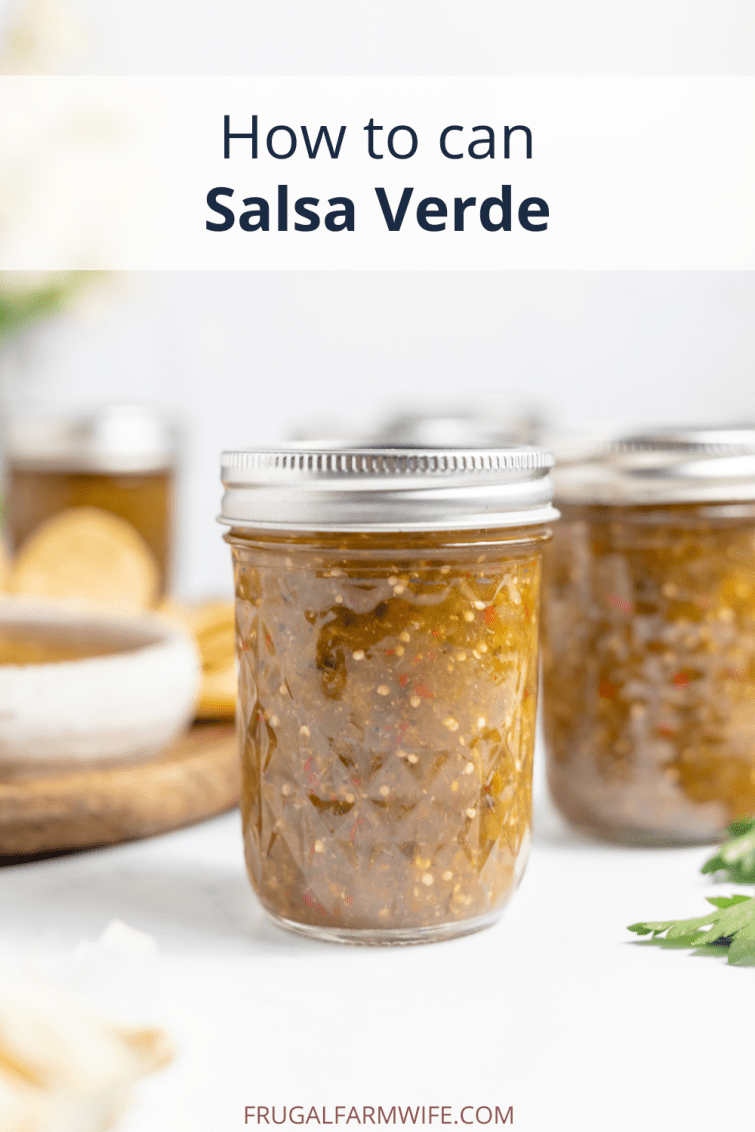
Before we get to the recipe itself, I want to take a quick minute to say one thing: we overcomplicate making food.
There’s nothing wrong with roasting and toasting, and making things the very best they can be and bringing out different flavors here or there.
But I feel like the inundation of perfect pictures has made us believe that everything has to be more involved than it really does, and take longer than it really does.
For instance with this tomatillo salsa verde recipe.
I used to argue with myself. Shouldn’t I roast the tomatillos first? Do I have time for that? Is it going to be as good as someone else’s if I don’t?
And then I realized that the Mexican ladies I know – the Mexico where tomatillo salsa comes from – boil everything, and their salsa is really good.
Doing it their way enables us to make large batches to can in a reasonable amount of time, and guess what? All your flavors are right there, cooking together in one pot. Melding into one, the way they should.
So no. I won’t be roasting my tomatillos and peppers – not right now. And we will be enjoying delicious homemade salsa all year long because of it.
Ingredients for canning salsa verde

- Tomatillos. If you aren’t growing your own tomatillos, most grocery stores carry them, or you can get them at your local farmers market depending on where you live. As a substitute, you can also use green tomatoes. Some people recommend peeling green tomatoes if you use them, but I have never found it necessary. The skin in a green tomato is very thin and tender.
- Poblano peppers. The reality is that you can use any combination of peppers that you want, but I find the addition of poblanos to be incredibly flavorful, without adding too much spice for my kids to be able to handle.
- Jalapeño peppers. While my kids don’t handle too much spice, a little bit is still nice. You can add more or less of these depending on your heat tolerance. Serrano peppers can also be used. As you can see in the picture above, I used red jalapenos.
- Onions. Another essential for flavor, don’t skimp on the onions. Red onions are traditional, and I use them if I have them, but don’t shy away from using yellow onions – which is what you’ll see used in these pictures. You can also use white onions.
- Garlic. I joke that the more garlic, the better, but it’s not really a joke – it’s true. green salsa and garlic go hand in hand perfectly.
- Lime juice. This adds a nice little bit of acid to balance out the sweeter flavors in this salsa recipe. You might think that fresh lime juice is the superior ingredient, but bottled juice has a consistent pH, and is very helpful in getting consistent results, and especially when you’re canning, for managing the pH level of your product. You can substitute lemon juice if you need to, and vinegar can also be used.
- Salt. This is not only essential for flavor, but also for preservation in your canning recipe. I recommend not skimping!
- Cumin. This spice adds so much depth to the flavors in tomatillo salsa.
- Oregano. This is an aromatic that hits your nose first, and then your taste buds, enhancing your experience of the flavor.
- Black pepper adds a nice, pungency to the mix.
- Fresh cilantro leaves. For those who don’t care for cilantro, use Italian parsley instead! It has a nice, subtle flavor to add to your recipe.
Canning supplies for canning green salsa
Salsa verde is a water bath canning recipe. So instead of a pressure canner, you’ll need a large pot. This can be a tamale pot, or a stock pot – anything you can put a rack in to keep your jars off of the bottom of the pot, and that is tall enough to cover your jars with water with a few inches to spare.
Or you can use a boiling-water canner that was made specifically for that purpose. Most farm and ranch stores carry them, or you can order one from Amazon. I have both a granite canner, and a stainless steel canner with a glass lid. Both work equally well, but I do prefer the glass lid so I can see inside and know how hard it’s boiling.
You’ll also need jars. This probably goes without saying. The size of jar you use depends on your needs. I use half pint jars because we’re a small family, and since homemade salsa doesn’t contain any preservatives, I want a jar that’s small enough that we’ll eat it all before it starts to turn.
Sometimes I can salsa in pint jars, which works well if we open one for nachos or something, but if I’m using it to just put a spoonful on scrambled eggs in the morning, I won’t use it fast enough.
I use pretty much any brand of jars that I’ve collected over the years. As long as it’s a nice thick jar, and the rim is unblemished, they all seal just fine,
Canning lids are a slightly different story. I’ve used a variety of brands, and I prefer Denali canning lids, which have a money back guarantee, meaning that they’re invested in making lids that seal.
Most other lids are also fine, with a few exceptions. I steer clear of Mainstays canning lids. Those are a little unpredictable.
A canning funnel is also nice to have. It makes your jars easy to fill without making a mess.
Same thing with a jar lifter. This is nice to have especially if you’re making multiple batches so you can get the jars out of the canning while they’re still hot to get the next batch going.
Recipe for Canning Salsa Verde
- Wash vegetables. If the papery husk is still on your tomatillos, remove that before washing.
- Core and cut tomatillos into wedges, and add to a large pot.
- Deseed both poblano and jalapeño peppers, cut into chunks, and add to the pot.
- Peel and quarter onions, also adding to pot.
- Peel garlic as well and add to the pot.
- Add a cup to a cup and a half of water to the pot, and cover.
- Heat gently to a simmer.
- As the tomatillos cook, they will soften and release water. Once there is enough water in the pot with your vegetables, you can turn the heat up.
- Stir vegetables frequently, and continue cooking until tender. this should take 8-10 minutes.
- Remove from heat.
- Add cilantro and blend in batches in a food processor or blender, or in the pot with an immersion blender.
- Place salsa back in the pan, and add remaining ingredients (lime juice, salt, cumin, oregano, and pepper).
- Bring back to a low simmer, and let steam away until somewhat thickened (use your judgement for how thick you want your salsa).
- Remove from heat again. Your salsa is now ready to can.
Canning instructions:
- Prepare water bath canner with hot water.
- Sterilize jars and lids.
- Fill jars with prepared salsa, leaving a half inch headspace.
- Clean rims with a cloth and screw down lids and rings firmly.
- Arrange jars in canner so that they do not touch, cover, and bring pot to a boil.
- Process for 15 minutes.
- Remove from heat and let cool for 10-20 minutes before removing jars from canner.
- Once jars are removed, let finish cooling undisturbed for 24 hours.
- Check or seals, and wash jars if needed.
- Store in a cool place out of direct light.

How to use canned salsa verde
If you’re making tomatillo salsa, you probably already know what you want to use it on, and we all know it’s addictive served with tortilla chips. Wash vegetables.
But I will say this salsa is perfect on chicken, used in chicken enchilada filling, in breakfast burritos, on eggs, with nachos, tacos, burritos – you name it. We use it for everything. My favorite way to use it is in making carne en su jugo. I often use it as a shortcut to making tomatillo broth.
Remove from heat again.
But I will say this salsa is perfect on chicken, used in chicken enchilada filling, in breakfast burritos, on eggs, with nachos, tacos, burritos – you name it. We use it for everything. My favorite way to use it is in making carne en su jugo. I often use it as a shortcut to making tomatillo broth.
More recipes for you
- Homemade salsa recipe for canning
- Peach Salsa canning recipe
- Strawberry Jalapeño jam recipe
- Easy recipe for canning stewed tomatoes
- Canning cherry tomatoes
Canning Salsa Verde

easy recipe for making salsa verde
- Yield: 8 cups 1x
Ingredients
- 2 lbs tomatillos (with husks removed)
- 2 poblano peppers
- 3–5 jalapeño peppers
- 3 large onions
- 10 cloves garlic
- 1 cup fresh cilantro or Italian parsely
- 3/4 cup lime juice
- 1 Tablespoon salt
- 1 Tablespoon cumin
- 1 Tablespoon oregano
- 1 1/2 teaspoons black pepper
Instructions
- Wash vegetables before starting
- Core and quarter tomatillos, peel and quarter onions, deseed all peppers, and roughly chop, and peel garlic.
- Add all vegetables to a large pot, and add 1-1 1/2 cups of water to prevent scorching until the vegetables sweat down, cover pot, and place over medium heat.
- Bring to a simmer, stirring occasionally. As vegetables soften, they will release water, and you should end up with plenty of moisture in your pot to keep vegetables from scorching.
- Simmer 8-10 minutes until all vegetables are tender.
- Remove from heat and add cilantro.
- Blend salsa. You can do this in the pot with an immersion blender, or do it in batches in a food processor or blender, being careful not to buy yourself with the hot liquid.
- Place pot back over heat, and stir in remaining ingredients.
- Bring back to a simmer for 10-15 minutes until salsa has thickened to your desired thickness.
To can:
- Prepare water bath canner with hot water.
- Sterilize jars and lids (you can sterilize jars by boiling in the water bath canner for 1-2 minutes. Use a jar lifter to remove and drain jars).
- Fill prepared jars with hot salsa, leaving a half inch of headspace.
- Wipe rims clean if needed, and screw down lids and rings.
- Arrange jars in canner so that they don’t touch, place lid on canner, and bring to a rolling boil.
- Process pints or half pints for 15 minutes, and quarts for 20 minutes.
- remove from heat, and let cool 20 minutes.
- Remove jars, and let rest undisturbed for 24 hours. I usually cover hot jars with a towel until they’ve cooled to the point where cool drafts aren’t a danger to them.
- After 24 hours, check for seal, wash jars if needed, and store in a cool place out of direct light.


I’ve been looking for a good salsa verde recipe, and this one looks really simple and practical. The homemade version sounds so much better than anything from the store!
This is a simple recipe I can do it for family
Great recipe! Only thing I did differently was to roast the veggies and use mexican oregano (from my garden). Love the addition of Poland peppers.
The flavors are wonderful. Thank you.